
Scottie Scheffler is the most dominant ball-striker on the planet. At the 2025 PGA Championship, played at Quail Hollow Club in Charlotte, North Carolina, he won by five strokes with a final score of 11-under-par 273, collecting his second major title [2]. That margin of victory was not a statistical accident. It reflected something deeper: a swing that routinely produces the most consistent impact geometry on tour, built on a set of mechanical principles that are, on the surface, highly unconventional – but which, on closer examination, reveal a remarkable internal coherence [3].
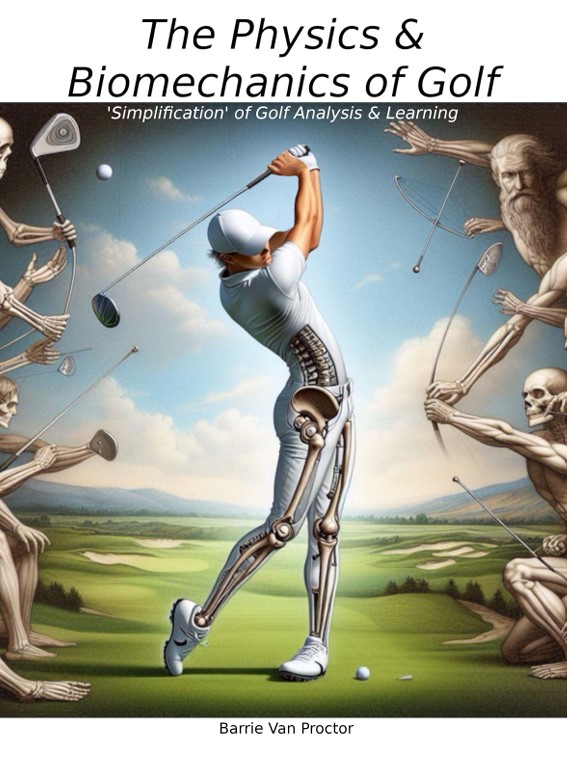
This analysis examines that coherence through the framework of The Physics and Biomechanics of Golf [1], considering Scheffler’s distinctive idiosyncrasies, the conditions that make them functional, and what his swing tells us ahead of the 2026 PGA Championship — returning to major championship golf at Aronimink Golf Club in Newtown Square, Pennsylvania.
The setup.
Scheffler addresses the ball in a position that PGA Professional Jack Backhouse, writing in National Club Golfer, describes as “A1 perfect” [3]. The posture is neutral and athletic: relatively straight legs, minimal hip bend, the back of the arms positioned above the balls of the feet. The stance is notably wide by modern tour standards. This width is not incidental, it is structural, providing the base needed to withstand the extreme lateral forces his downswing generates without toppling [3].
The grip presents the next idiosyncrasy. Scheffler holds the club in a neutral to slightly weak position, a rarity among elite ball-strikers who typically favour neutral to strong (interestingly, a trait he shares with Nelly Korda, the subject of our last article). He works on grip pressure and position constantly, and it is reported that he carries a grip trainer to every tournament to prevent slippage and drift [3]. The weakness of the grip, combined with the upright wrist position at the top, produces an open to neutral clubface orientation at the top of the backswing, a configuration that, in most players, would be the precursor to a significant left-to-right ball flight. In Scheffler’s case, the downswing sequence corrects this entirely.
The backswing.
The one-piece takeaway is wide and conventional. What becomes unconventional is the position Scheffler reaches at the top of the backswing. He keeps his right arm nearly fully extended throughout, creating an arc of exceptional width, possibly the widest of any player on the PGA Tour [3]. The hands arrive at a position that is extremely high, with a vertical shaft angle that draws comparisons to Jack Nicklaus, who famously employed an upright, narrow-to-the-body hand plane [3].
This upright position at P4 (top of backswing), which places Scheffler in the ‘synched’ rather than maximally ‘sequential’ subgroup, for backswing kinematics. Nevertheless, it does several things simultaneously. It widens the swing arc, which is a primary opportunity to deleiver clubhead speed for him. It promotes a high, penetrating ball flight, particularly valuable with irons, where Scheffler’s control is exceptional. It also sets up the signature problem that the downswing must solve: from this position, without intervention, the club would approach the ball on a steep, out-to-in path, producing the kind of left-to-right slicing trajectory that would prevent the player from competing at any serious level [3].
The relationship between the hands — their height, depth, and face orientation at the top, directly influences the plane on which the club descends [1]. Scheffler’s lack of depth at the top (his hands sit high, rather than back and deep) is the source of the compensatory challenge the downswing must address. The kinematic chain [1] is wound with significant rotational potential, but the sequencing required to unwind it on a neutral path is highly demanding.
The downswing: the lateral slide as the governing mechanism.
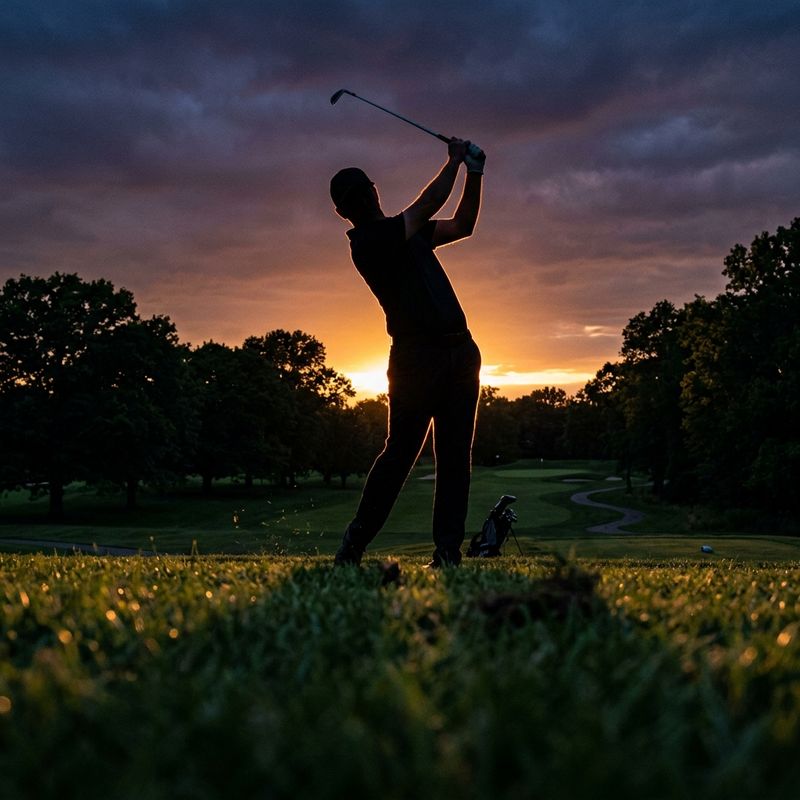
The downswing is where the analysis becomes most instructive. To transition from the steep, upright top position to a neutral impact, Scheffler initiates the downswing with a lateral drive of the hips and legs toward the target that is, in Backhouse’s assessment, greater than any other professional on any tour [3]. This lateral movement — sometimes called the “Scheffler Shuffle” in reference to its visible expression through the feet, is the mechanism that resolves the steep plane set at the top.
The physics of this are precise. As the hips shift laterally before they rotate, the shoulders are temporarily prevented from opening too early. This delay in shoulder rotation is what allows the club to shallow – to drop from its steep position onto a flatter, more from-the-inside path. Without the lateral shift, Scheffler has acknowledged (and Backhouse makes the point explicitly) that the shoulders would open aggressively and the club would approach the ball steep and from outside, producing a pronounced slice. The lateral drive is, in Backhouse’s words, “the glue that keeps the whole swing together” [3].
This interaction between lateral GRF application and rotational sequencing is precisely what The Physics and Biomechanics of Golf [1] describes in its treatment of Force Order: Horizontal force precedes and enables Rotational force, which enables Vertical force. Scheffler’s lower body initiates with a horizontal lateral push before rotating. The result is a sequenced delivery in which the pelvis leads, the torso follows, and the arms and club arrive last – a textbook proximal-to-distal kinematic chain [1], even if the visible expression of it looks, at first glance, like a controlled stumble.
The foot slide itself is a consequence of this extreme lateral force. As the back foot slides backwards and outwards across the turf, it is dissipating force that the body cannot fully contain through the conventional braced-rear-foot model. This is not a flaw; it is a release valve [3]. The Three Fundamentals from The Physics and Biomechanics of Golf [1] describes biomechanics neutrality as the state in which force components are balanced, neutrally opposing and optimised without restriction — and Scheffler’s footwork represents the body finding its own equilibrium point under conditions of extreme force production. The consequence of constraining it would be a loss of power, not a gain in it.
The “open window” at impact – the maintained gap between the upper arms as the club passes through the hitting zone, prevents excessive forearm rotation (which is often over expressed, via a hyper-focus on pronation / supination (elbow rotations), rather than intra-gleniodal (shoulder) rotation in contemporary analysis and instruction) and keeps the clubface square for a longer window [3]. This is a key source of Scheffler’s directional consistency. The face neither opens nor closes aggressively through impact; it remains on a more neutral arc because the arm structure is stable. From a pendulum mechanics standpoint [1], the club behaves as the distal segment of a compound pendulum, with the arm-wrist unit as the proximal segment. The stability of the proximal segment directly governs the consistency of the distal one.
The finish: function over form.
The finish position does not conform to what most coaches would describe as balanced. The feet slide, the body tilts, the weight distribution is dynamic rather than static. Scheffler’s follow-through reflects the forces he has generated rather than an attempt to arrive at a picture-perfect pose. This is consistent with the book’s principle that the finish is an output of what preceded it, not a target in itself [1]. A high, wide extension through the ball is an expression and continuation of the wide arc, contributing to the clubhead speed that delivers Scheffler’s characteristic combination of high launch and controlled distance.
Scheffler at Aronimink: suitability for the 2026 PGA Championship venue.
The 2026 PGA Championship will be contested at Aronimink Golf Club, Newtown Square, Pennsylvania. A Donald Ross design opened in 1928, restored by Gil Hanse, that plays as a par-70 course stretching to over 7,200 yards from the championship tees [4]. Aronimink’s defining characteristics are its ridge-and-valley terrain, which rarely provides a level lie, its bold bunkering, its demanding doglegs, and its undulating greens. It previously hosted the 1962 PGA Championship, won by Gary Player [4].
The course’s demand profile aligns strongly with Scheffler’s mechanical strengths. Aronimink, in the Donald Ross tradition, rewards precise, penetrating iron play over aggressive aerial attack. Uneven lies test a player’s ability to maintain consistent impact geometry across variable stance conditions, and this is precisely where Scheffler’s mechanically stable arm structure and wide-arc delivery provide an advantage. A player who relies on a body-driven, connected release is more susceptible to stance-induced variability; a player whose arm structure is as stable as Scheffler’s will hold the face more consistently even when the feet are not level.
The demanding doglegs and layered bunkering reward accuracy over raw distance. Scheffler’s ball-striking (as measured by Strokes Gained: Tee-to-Green consistently across the 2024-2025 season) is built on a neutral ball flight that holds its shape under pressure. His controlled left-to-right flight (for a right-hander playing from an upright position) suits courses that require shape management. The par-70 configuration, which is unusual at major championship level, removes the birdie-opportunity density of longer par-5 layouts and places greater premium on precision over scoring bursts.
The one area that will bear scrutiny at Aronimink is the putting. Scheffler’s putting has been the variable element in his game; at the 2025 Quail Hollow, he finished +1 on the notoriously demanding “Green Mile” (holes 16, 17, and 18) [2]. Ross greens are typically small, contoured, and punishing of approaches that do not hold the correct quadrant. Scheffler’s iron control mitigates this considerably, as the quality of his approach positioning reduces the difficulty of the putts he faces. But the greens at Aronimink will test patience.
Scheffler won the 2025 PGA Championship at Quail Hollow, a course that rewards athletic power and trajectory management. Aronimink makes a different set of demands: more classical, more precision-oriented, more reliant on trajectory and shape control across uneven ground. On the available evidence, those demands map to Scheffler’s strengths more precisely than they do to the strengths of most players on the current circuit.
Comparison (just for fun) with the 2025 PGA Championship winner.
| Aspect | Scottie Scheffler (2025 PGA Champion) | General Tour Field (2026 Context) |
| Backswing plane | High, upright (Nicklaus-esque) | Typically flatter, more neutral depth |
| Downswing initiation | Extreme lateral hip shift before rotation | Variable; most players rotate earlier |
| Footwork | Dynamic foot slide (back foot) | Generally braced rear foot |
| Impact | Neutral path, stable arm structure | Variable |
| Ball flight | Controlled high left-to-right | Varies widely |
| Uneven lie suitability | High (stable arm structure) | Varies |
| PGA Championship result | Won (Quail Hollow, 2025, -11, 5-shot margin) | Pursuing in 2026 |
Scheffler, as the defending PGA Champion, arrives at Aronimink with the form, the game pattern, and the mechanical profile to be a serious contender. His is a swing that repays understanding, because the idiosyncrasies are not anomalies, they are his own nuanced biomechanics solution.
Reference List
[1] Proctor, B.V. (2024). The Physics and Biomechanics of Golf. (Primary Technical Source).
[2] PGA Championship. Scottie Scheffler Wins the 107th PGA Championship. pgachampionship.com (confirmed read, 2026-05-05)
[3] Backhouse, J. Scottie Scheffler Swing Analysis: What Makes It Work? National Club Golfer, May 4, 2025. https://www.nationalclubgolfer.com/golf-tips/learn-from-the-pros/what-makes-it-work-scottie-scheffler-swing-analysis
[4] Aronimink Golf Club – course profile. Confirmed via search data cross-referenced with pgachampionship.com historical records.
If you have, thanks for taking the time to read these blogs and feel free to comment or get in touch with any questions or queries.
All the best.
golfbiomechanics.net
We author, publish and sell our books here in the UK, along with our worldwide distributors including Amazon. As an Amazon Associate, ‘golfbiomechanics.net’ earns from qualifying purchases on affiliated products. This means that if you click on an affiliate link and make a purchase, ‘golfbiomechanics.net’ may receive a small commission at no additional cost to you. Thank you for supporting this website and helping us continue to provide the best possible, valuable content!

Leave a Reply